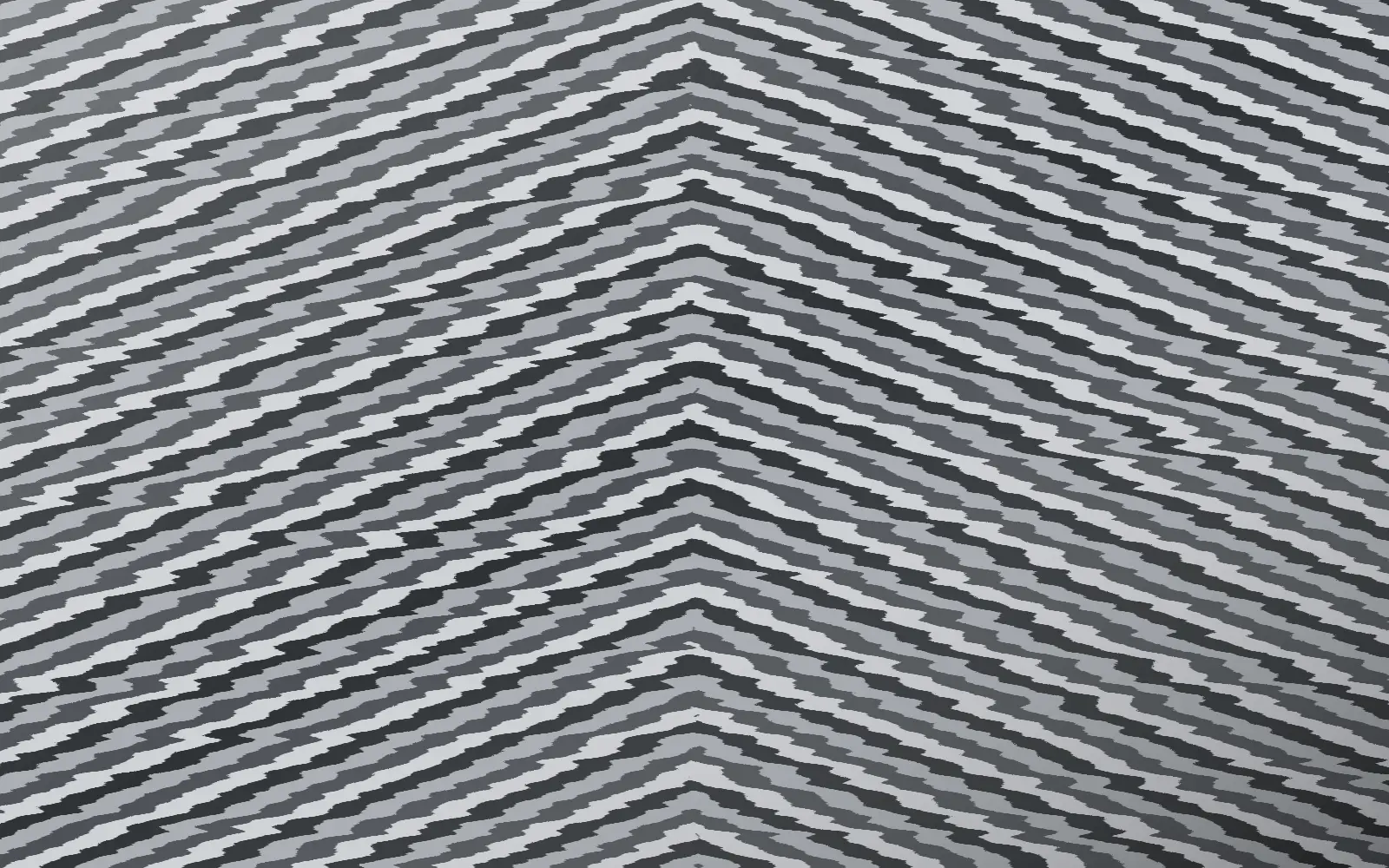
Because the wedge drives the layers sideways, feather Damascus needs very clean welds — any inclusion opens up when the billet is split. That is why genuine feather blades cost more than random or raindrop.
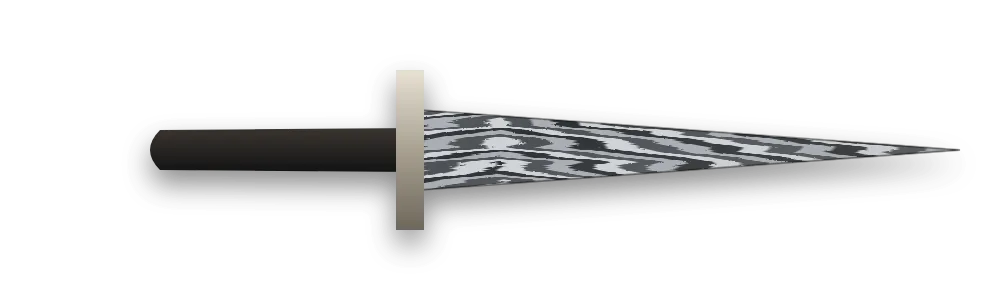
The “spine” of the feather usually runs down the centre of the blade, so it suits symmetrical blades: daggers, carving knives, gentleman’s folders and Viking-style swords.
Spotting imitations: printed feather patterns are perfectly mirror-symmetrical and repeat exactly; forged feather drifts slightly off-centre and the barbs vary in spacing.
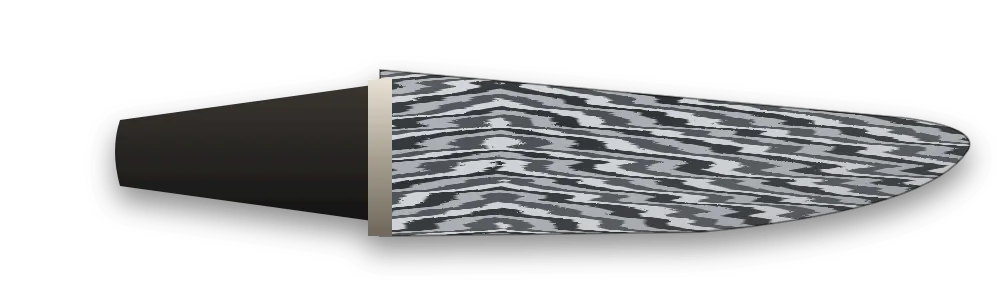
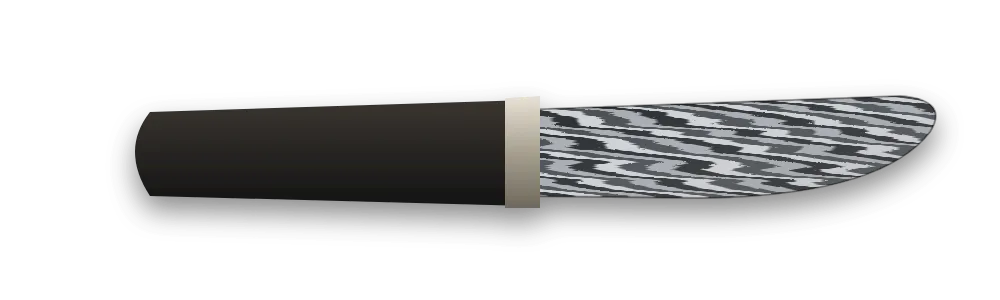
Where we use feather Damascus
Ordering Feather Damascus
Feather Damascus is available across the collections above as a stock option or on private-label designs. Because every billet is forged individually, no two blades match exactly; for sets and paired products we cut from the same billet or batch so the pattern stays consistent. Spec sheets state the steels, layer count and hardness, and we send etch photos with samples so you can judge the pattern before ordering.
Feather Damascus questions
Why is feather Damascus expensive?
It requires splitting a billet with a wedge and re-welding it without flaws; failure rates are high, so more labour goes into each good blade.
How do I spot fake feather Damascus?
A printed feather is perfectly symmetrical and repeats. Forged feather drifts off-centre and the barbs vary in spacing.