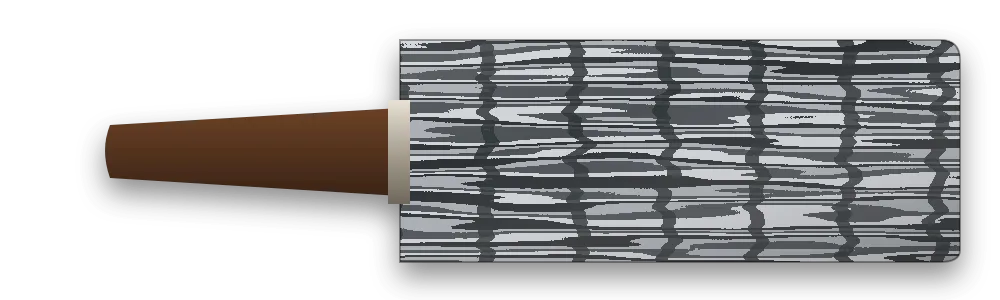
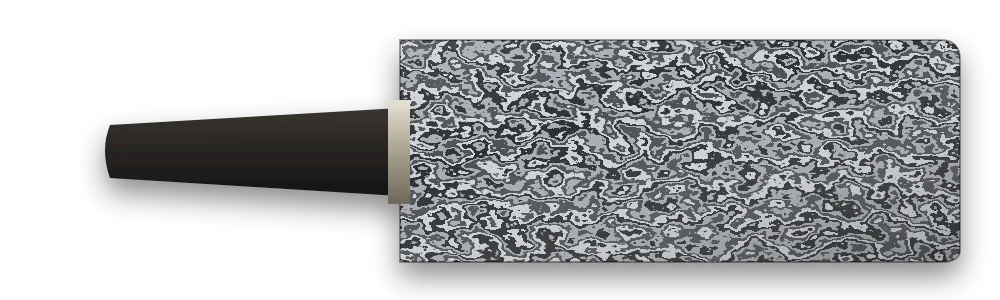
Bone cleaver vs vegetable cleaver
| Meat / bone cleaver | Chinese vegetable cleaver (cai dao) | |
|---|---|---|
| Spine | 5–6 mm | 2–3 mm |
| Weight | 600–900 g | 250–350 g |
| Hardness | 55–57 HRC (tough) | 58–60 HRC (sharp) |
| Use | Ribs, joints, poultry backbones | Slicing, dicing, scooping food |
Using a thin cleaver on bone chips the edge — the most common warranty complaint retailers see. Every cleaver we list states which job it is for.
How we verify Damascus cleavers
Every design in this collection is genuinely pattern-welded. Before a batch ships we pull samples and check four things: that the pattern runs over the spine and into the edge bevel, that an etch shows no open welds or inclusions, that Rockwell hardness matches the spec sheet, and that fit and finish meet the standard for the price tier. The results are recorded against the batch so reorders match.
Ask for spec sheets on any design above — they list the steels, layer count, hardness, dimensions, handle materials and packaging, plus UK and US market notes.
Questions buyers ask
Can a Damascus cleaver cut through bone?
A heavy meat cleaver with a thick spine and a slightly softer edge can. A thin Chinese vegetable cleaver should not be used on bone.
How do I stop a carbon Damascus cleaver rusting?
Wash and dry it immediately after cutting meat, then wipe on a little food-safe mineral or camellia oil. See our guide to keeping Damascus from rusting.