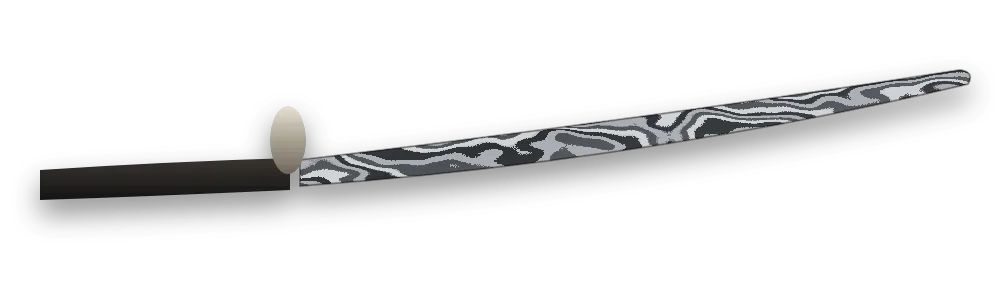
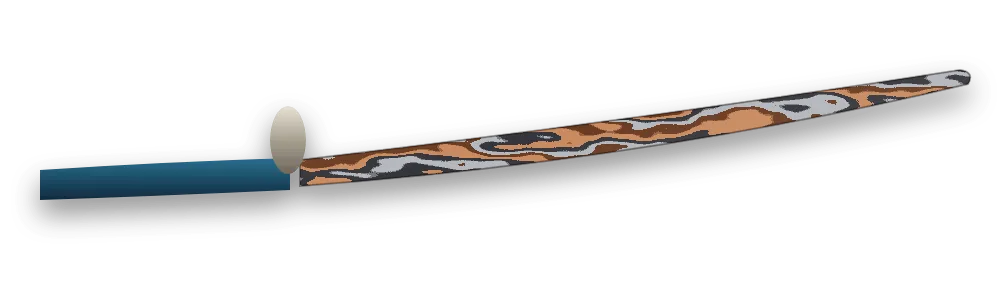
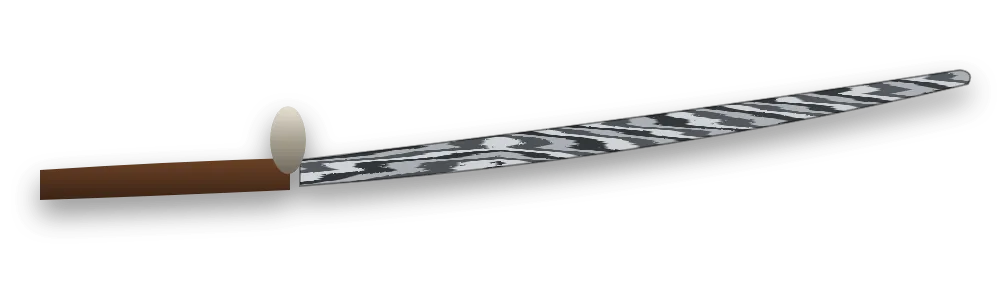
Folded steel vs Damascus
Traditional Japanese swords were folded to refine the steel; that produces a subtle grain (hada), not the bold contrast of nickel-bearing Damascus. A modern Damascus katana uses steels such as 1095 and 15N20 for a high-contrast pattern. Copper Damascus katanas add copper layers for colour — beautiful, but the copper is soft, so these are display swords.
UK curved-sword rules
In the UK, the sale of curved swords with a blade of 50 cm or more is banned, with exemptions that include swords made by traditional methods of hand forging and certain martial-arts and historical uses. Most full-length katanas are over 50 cm. We only quote full-length katanas to UK buyers where an exemption clearly applies; wakizashi and tanto-length pieces are alternatives. Always take legal advice for your situation.
How we verify Damascus katanas
Every design in this collection is genuinely pattern-welded. Before a batch ships we pull samples and check four things: that the pattern runs over the spine and into the edge bevel, that an etch shows no open welds or inclusions, that Rockwell hardness matches the spec sheet, and that fit and finish meet the standard for the price tier. The results are recorded against the batch so reorders match.
Ask for spec sheets on any design above — they list the steels, layer count, hardness, dimensions, handle materials and packaging, plus UK and US market notes.
Questions buyers ask
Is a Damascus katana a real katana?
It is a Japanese-style sword in katana form. A traditional nihonto is made in Japan from tamahagane steel by licensed smiths; Damascus katanas are modern pattern-welded swords.
Can I sell katanas in the UK?
Curved swords with blades of 50 cm or more are banned from sale in the UK unless an exemption applies, such as traditional hand-forging. Shorter blades and qualifying swords can be sold to adults with age checks.
Is a copper Damascus katana functional?
No. Copper is soft and weakens the blade, so copper Damascus katanas are display pieces.