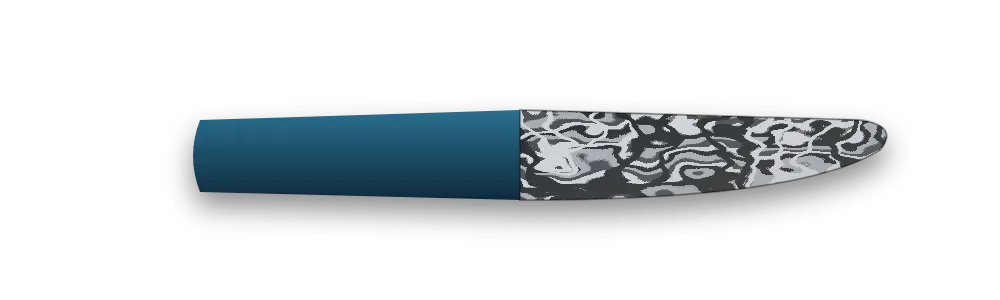
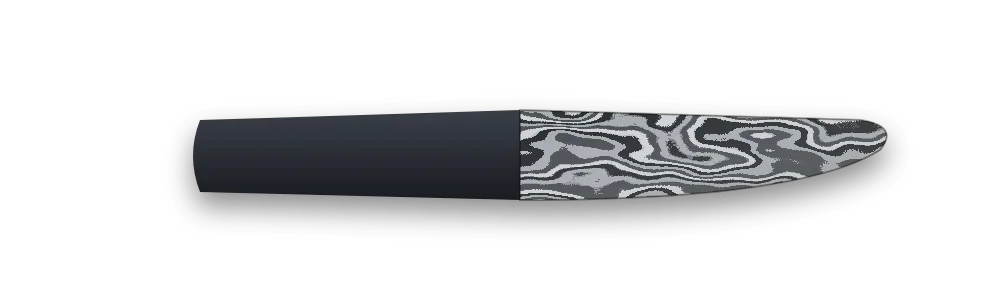
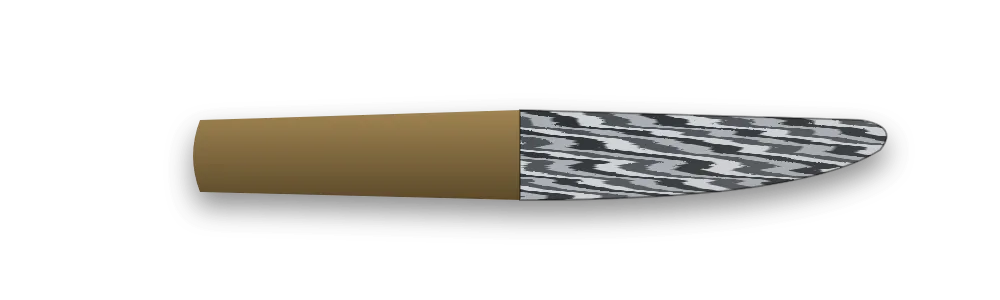
Straight edge vs serrated
Serrated steak knives stay “sharp” because the teeth tear; that is why restaurants used them. A straight-edged Damascus steak knife with a VG10 core gives a cleaner cut, better presentation on the plate and can be honed and resharpened. For high-volume restaurants that machine-wash cutlery, a stainless Damascus with a full-tang resin or G10 handle is the durable choice.
Specifying steak knives for hospitality
- Blade 4.5–5 in, 2–2.5 mm spine.
- Rounded or spear tip for table safety.
- Handles that survive commercial washing (G10, resin, Micarta) — avoid untreated wood.
- Sets of 4, 6 or 8 in a presentation box, or bulk-packed for restaurants.
UK hospitality buyers: steak knives with sharp points are not exempt from the 2026 bulk-sale reporting rules for consumer sales, but business-to-business purchases are. Provide your company or VAT number when ordering.
How we verify Damascus steak knives
Every design in this collection is genuinely pattern-welded. Before a batch ships we pull samples and check four things: that the pattern runs over the spine and into the edge bevel, that an etch shows no open welds or inclusions, that Rockwell hardness matches the spec sheet, and that fit and finish meet the standard for the price tier. The results are recorded against the batch so reorders match.
Ask for spec sheets on any design above — they list the steels, layer count, hardness, dimensions, handle materials and packaging, plus UK and US market notes.
Questions buyers ask
Are Japanese Damascus steak knives better than serrated ones?
For cut quality, yes: a sharp straight edge slices meat cleanly. Serrated knives tolerate more abuse and dull more slowly in rough use, which is why some busy restaurants still prefer them.
Can Damascus steak knives go in the dishwasher?
Hand-washing is recommended. Stainless Damascus with G10 or resin handles tolerates commercial washing better than wooden-handled or carbon blades.